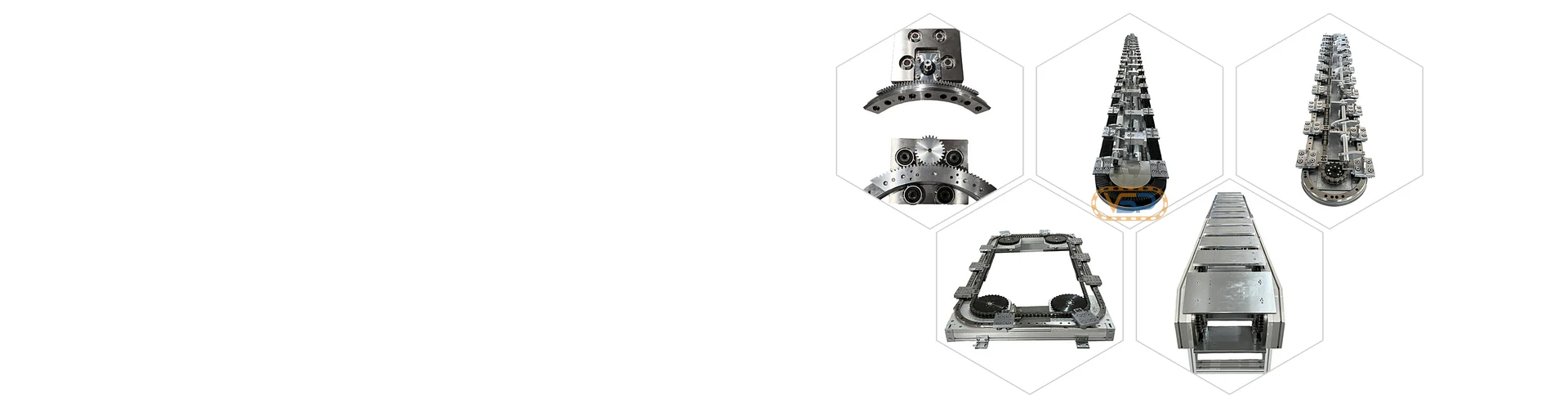
 How to choose between chain type and belt type ring guide rails? Comparison of load, cycle time and maintenance requirements
Both chain-type and belt-type ring guide rails can be used for cyclic transportation, assembly, inspection and workstation connection. In actual projects, the solution cannot be determined directly based on "the chain is more suitable for heavy loads" or "the belt runs quieter". It must also be comprehensively judged based on the tool load, operating cycle time, route length, positioning method and maintenance conditions.
If the project is still in the planning stage, you can first useRing guide rail online selection systemConduct preliminary screening; after entering into equipment design, technicians will confirm the drive plan based on the layout diagram and actual working conditions.
The load of a single slide includes not only the weight of the product, but also the jig, fixture, cylinder, cable and other following parts. If the center of gravity of the tooling is offset, there is impact load, or the loads on multiple slides are very different, this should be explained at the planning stage.
The matching between chain type and belt type needs to be judged based on the actual load and motion status. Providing total weight alone is usually not sufficient to complete an accurate selection.
Continuous cycles, frequent indexing and multiple starts and stops have different requirements for drive solutions. The target production capacity, number of work stations, distance of each movement, dwell time, and whether linkage with robots, vision, dispensing or inspection equipment is required should be clearly defined.
When the cycle time is high, in addition to running speed, acceleration and deceleration, load changes and docking stability must also be checked. For equipment that requires station positioning, it should also be stated whether the final positioning is performed by guide rails, fixtures, or external positioning mechanisms.
Circular guide rails can adopt elliptical, rectangular, circular or arc splicing layouts. The drive selection is not only related to the guide rail form, but also to the route length, turning position, number of slides and installation space.
When space is limited, the layout should first be confirmed based on the maximum envelope of the guide rail outline, carriages and tooling. Space for cables, sensors, guards and maintenance tools should also be reserved at the turning position.
The device usage environment will affect the confirmation of the driver solution. For example, whether there is dust, oil pollution, cleaning requirements, corrosive media or a high continuous operating frequency on site should be stated in the early stage.
Maintenance methods also need to be considered in advance, including operating space for tensioning, inspection, lubrication or replacement of components. Insufficient reservations during the design stage will make subsequent maintenance more difficult.
When choosing a chain-type solution, it is recommended to focus on confirming the load, start-stop frequency, tensioning and maintenance conditions, as well as the movement status of the tooling in the turning position.
When choosing a belt-type solution, it is recommended to focus on confirming the cycle time, route, tensioning method, operating environment and long-term use conditions.
No matter which method is used, it should be finally confirmed based on the guide rail specifications, the number of slides, the center of gravity of the tooling, positioning requirements and the overall machine control method.
Before submitting a plan, it is recommended to prepare these materials
There is no "absolute preference" between chain type and belt type annular guide rails out of working conditions. Only by clearly explaining the load, cycle time, layout, positioning requirements and site environment first, and then confirming the drive form, can subsequent design adjustments be reduced.
When the preliminary layout, load and workstation information are available, the ring guide online selection system can be used for preliminary screening; the final model and driving method should be subject to the technical confirmation drawings.
Related content
Ring guide rail online selection system
How to choose circular guide rail? Load, cycle, layout and driver confirmation checklist

Precision conveying systems · Products and service
Products
Chain-driven ring guidesBelt-driven ring guidesPrecision link conveyorsCurved and linear guide componentsMagnetic levitation conveyorsCam-link ring guidesAbout us
Company profileOur facilitiesCertifications VideosApplicationsApplications
Automotive & new energy Precision electronics assembly Consumer electronicsMedical devicesNew energyPrecision dispensingNews
Company news Industry news NewsContact us
Contact details WhatsApp Business
Contact details+86 18912659251
Links: